
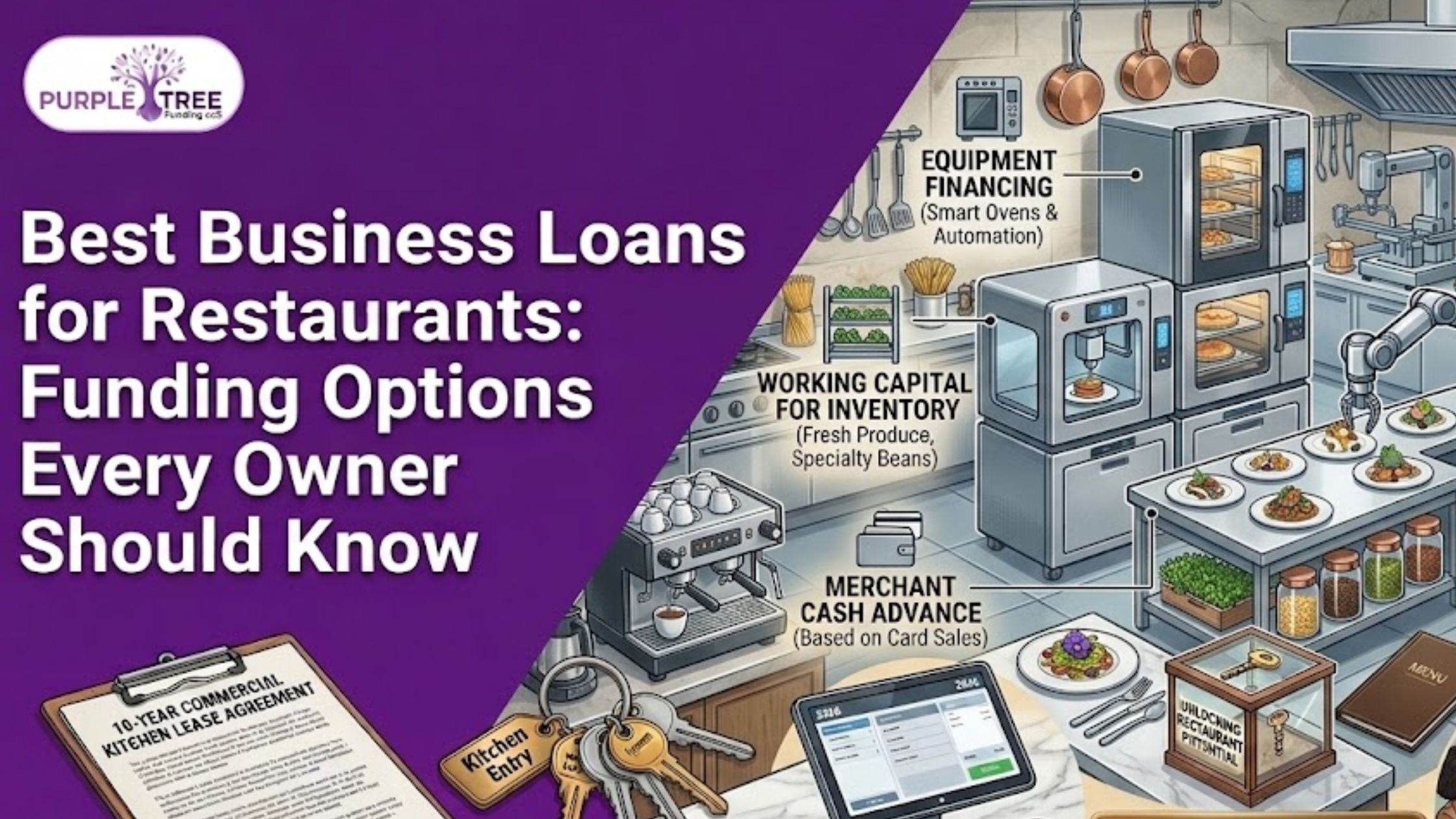
Running a restaurant in the US means dealing with cash flow gaps that show up at the worst times. Food costs spike before the weekend rush. A freezer dies on a Tuesday. A second location sits ready, but capital is not. Business loans for restaurants exist to close those gaps, but not all options are built the same way. Some restaurants in Florida, Texas, and across the country take on more debt than their growth requires.
This guide breaks down your real options and explains how to think about each one.
What Are the Best Funding Options for Restaurant Owners in the USA?
Business loans for restaurants include term loans, lines of credit, revenue-based financing, merchant cash advances, and SBA-backed products. The best fit depends on your revenue timing, growth goal, and how quickly you need capital to move.
Here is a quick look at what most restaurant owners work with:
- SBA 7(a) loans work well for long-term investments, such as renovations or real estate purchases.
- Revenue-based financing ties repayments to sales volume, which fits restaurants with seasonal swings.
- Merchant cash advances offer fast access to capital for owners with consistent card transactions.
- Business lines of credit provide flexible access for recurring needs, such as inventory restocking.
- Working capital advances are useful when a short-term gap is slowing down a growth move.
Which Restaurant Financing Options Actually Match How a Restaurant Runs?
Most general loan comparisons miss one thing: restaurants do not earn revenue the way a law firm or a contractor does. Income comes in daily, in small amounts, across dozens of transactions. Expenses cluster around specific days. That timing gap is where most funding decisions go wrong.
Here is what the right restaurant financing options should account for, and why structure matters more than rate alone.
Revenue-Based Financing for Seasonal Volume
A restaurant in Miami or Nashville might do 60 percent of its annual revenue between November and March. Revenue-based financing adjusts to that. Payments flex with monthly sales rather than staying fixed. That keeps cash available during slow months instead of draining it.
Here is where this structure fits best:
- When your monthly revenue swings 30 percent or more across seasons
- When you are adding catering capacity or expanding hours before peak season
- When a fixed payment schedule would tighten cash flow during your slower months
Merchant Cash Advances for Fast Capital Decisions
A merchant cash advance is not technically a loan. It is an advance on future card sales, repaid as a percentage of daily or weekly transactions. Restaurant owners with strong card volume often find this the fastest path to working capital, sometimes with funds arriving within 24 hours.
What makes this structure fit restaurants specifically:
- Repayment moves with your card sales, so slow days mean smaller payments
- No collateral is typically required for smaller advance amounts
- It works for owners who need capital now to act on an opportunity, not three weeks from now
Lines of Credit for Recurring Operational Needs
A line of credit works more like a buffer than a lump sum. You draw from it when you need it, repay, and draw again. For restaurant owners managing inventory cycles, staffing for new service lines, or opening a second location in stages, this structure avoids over-borrowing.
Three situations where a line of credit makes more sense than a term loan:
- You are scaling a new menu category and need to test purchasing levels over several months.
- You hired two new kitchen staff ahead of a catering contract and need payroll support during onboarding.
- You are managing a renovation in phases and do not want to borrow the full amount upfront.
How Should Restaurant Owners Think About Fast Business Loans for Restaurants?
Speed matters when a kitchen equipment failure is costing you covers every night. Fast business loans for restaurants from alternative lenders typically move faster than banks, sometimes funding the same day. The tradeoff is cost. Faster capital usually carries a higher interest rate or shorter repayment window.
The right question is not "what is the fastest option?" It is "What is the fastest option that matches my revenue cycle?"
Here is how to evaluate speed vs. structure before signing anything:
- Understand repayment timing before comparing rates. A shorter term with daily remittances hits differently than a monthly payment over 18 months.
- Size capital to the specific initiative, not to the maximum you qualify for. A new pizza oven does not require the same capital as opening a second location.
- Ask whether payments are fixed or percentage-based, especially if your revenue varies week to week.
What Makes Purple Tree Funding Different for Restaurant Business Loans?
Not every funding company understands that a restaurant's cash flow looks nothing like a retail store's. Business loans for restaurants need to be structured around how money actually moves through the business, not just how much revenue appears on a bank statement.
Purple Tree Funding was built by operators who understand that growth capital should match the size of the opportunity. The goal is never maximum funding. It is the right amount, at the right time, structured to support a specific growth move without creating unnecessary pressure on operations.
Here is what that approach looks like in practice:
- Cash flow is reviewed in context, not just as a raw number on a statement.
- Offers are sized to the initiative, so a restaurant adding outdoor seating gets capital that fits that project, not a generic approval amount.
- Payments are aligned with revenue timing where possible, so repayments do not squeeze operations during normal slow periods.
- Funding can move in as little as 24 hours once everything is reviewed, which matters when timing is tied to a growth window.
- Restaurant startup loans and growth capital are evaluated based on business trajectory, not just credit score alone.
Final Thoughts
Restaurants run on timing. Food costs, staffing, seasonal rushes, equipment decisions, everything happens on a compressed schedule. The capital you take on should work the same way. Business loans for restaurants are not one-size-fits-all tools. The structure, repayment timing, and funding amount all need to match the specific growth move you are making.
Whether you are based in Chicago or anywhere across the US, the right restaurant financing options start with understanding your cash flow pattern first. If you are ready to explore what makes sense for your restaurant, Purple Tree Funding can walk you through options without locking you into anything.
Check your options at Purple Tree Funding, which takes under two minutes and has no hard credit pull to get started.
FAQs
What are Business Loans For Restaurants Typically Used For?
Most restaurant owners use growth capital for equipment upgrades, location expansion, new service lines, or adding staff ahead of a busy season. The funding should connect directly to a specific revenue opportunity.
What credit score is needed for restaurant startup loans?
Many alternative lenders work with scores around 600 or higher. Some prioritize monthly revenue and time in business more heavily than credit score alone when reviewing applications.
How fast can I get fast business loans for restaurants?
Alternative lenders like Purple Tree Funding can often fund within 24 hours once the application is reviewed. Bank approval timelines typically run several weeks longer.
What Restaurant Financing Options are Best For Seasonal Businesses?
Revenue-based financing tends to fit seasonal restaurants well because repayments adjust to monthly sales volume rather than staying fixed through slower periods.
Do I Need Collateral For a Restaurant Business Loan?
Smaller advances and revenue-based products typically do not require collateral. Larger SBA loans or term loans tied to real estate usually do. The requirement depends on the funding type and amount.