
Small business owners may get confused with complex business loan terms and definitions that can feel overwhelming. Without a clear understanding of financing terminologies, business owners may risk signing agreements that are not the right fit for their company.For this reason, having a business lending glossary plays a crucial role in learning common phrases and gaining confidence to avoid any common mistakes. In this article, we will guide you through all loan terminology for entrepreneurs that will help every business owner to sign the agreement with proper understanding.
Why Understanding Business Loan Terms Matters?
To apply for a loan, you must understand the specific language that is used by lenders to evaluate the eligibility and repayment obligations. In this section, we will cover the risk factor you may face if you are not well-aware of these business loan terms.
- Agreeing with unfavorable repayment schedules may lead a business owner into a major risk factor. To avoid this mistake, you should carefully learn and understand loan contract terms with its proper meaning.
- Most businesses may face a common mistake which misinterprets the difference between APR and interest. It can lead to choosing a more expensive financing option.
- You might face another challenge, that is confusion around credit checks for business loans. However, lenders may evaluate both personal and business credit scores differently.
- Lastly, overlooking the impact of secured vs unsecured loan meaning can result in taking unnecessary risk or missing out on better loan conditions.
The above are the most common challenges you might face while signing the loan agreement. It is better for every startup and running companies to get an understanding of business loan terms and definitions. In this way, you will be better prepared to navigate lending with confidence.
Key Business Loan Terms and Definitions Every Owner Should Know
In this section, we will break down the most common business loan terms and definitions you might see in lending agreements. Some most important financing terminology explained below for your better understanding.
1. Annual Percentage Rate (APR)

The term APR represents the total yearly cost of borrowing which includes both the interest rate and additional fees. Therefore, it is crucial to understand the difference between APR and interest: Interest Rate: It is the basic cost you will pay to borrow money which is mostly shown as percentage. For example, if you want a loan of $10,000 with a 10% interest rate you will pay $1,000 in interest for the year. The interest rate may vary based on your lending agreement and criteria. APR (Annual Percentage Rate): It is a more complete way showing the cost of a loan. It has both interest rate and extra fees such as processing fees or origination. For your better understanding, let’s assume the $10,000 loan with a 10% interest rate along with $500 processing fee. When these fees are added, the APR might be closer to 12% which will show the true cost of the loan. Bonus Tip: Every business owner should always compare APRs, not just interest rates to evaluate loan offers more efficiently. You can dig into the difference between APR and Interest rate is you are still unclear about it.
2. Factor Rate

You might have heard or read the terminology factor rate. The factor rate in lending is a decimal numerical digit that determines how much you will repay compared to the amount you have borrowed.For example:
- Loan amount $5,000 with a factor rate of 1.3.
- Total repayment = $6,500.
Bonus Tip: Like annual percentage rates, factor rates do not account for time. So, if your loan is for a short time the plan may get more expensive and for a longer time you might get leverage of a low factor rate.
3. Secured vs. Unsecured Loan
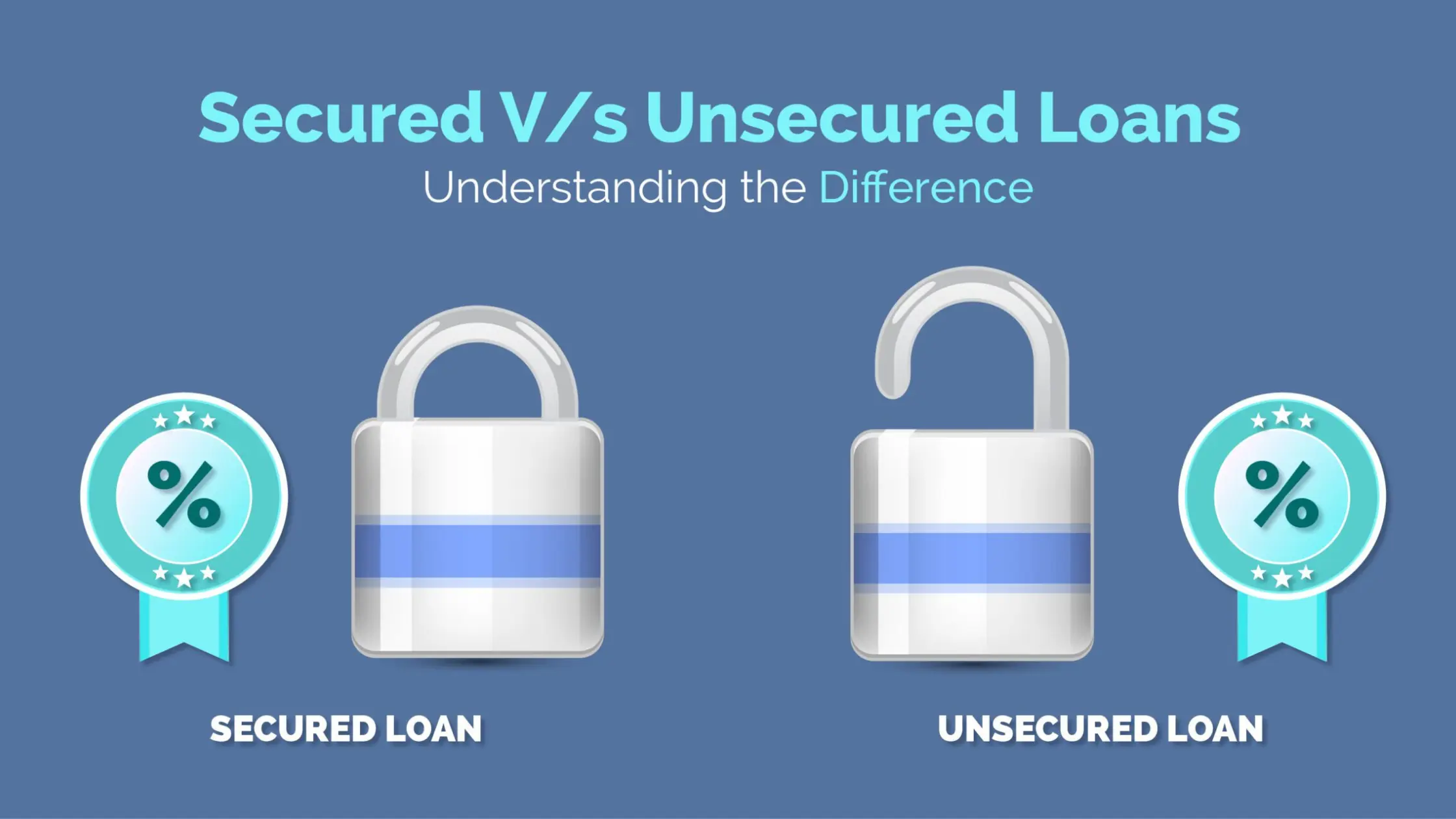
Sometimes, you may get confused while lenders classify loans as either secured or unsecured:Secured Loan: It is the type of loan which is backed by something valuable you own such as property, equipment or asset. It is also called collateral which means if you are not repaying your loan the lender can take collateral to cover the amount you borrowed. For Example: You can use office building and residential property as collateral for a loan you require. The more the value of collateral the more loan you can borrow.Unsecured Loan: The unsecured loan does not require any collateral. Since the lender is taking risks to lend you money that is why it may charge higher interest rates and apply strict rules to qualify.For Example: A $20,000 business credit line that is approved based only on your credit score, without needing property as backup.Bonus Tip: Understanding the secured vs unsecured loan meaning helps you decide whether you are comfortable risking assets to secure better terms.
4. Loan Term Length
In the business loan terms and definitions, the loan term length is a major part to understand while signing the loan agreement. It is the duration of loan agreement in which you must pay back the loan amount:
- Short-term loans (3–18 months): These loans provide quick access to cash and are approved faster. As we have discussed above, the shorter plan may come up with higher fees or interest.
- Medium-term loans (1–5 years): A practical option that balances affordability and flexibility. Most businesses consider medium term loans because the amount is easier to manage repaying the amount is not too short or too long.
- Long-term loans (5+ years): These loans spread repayment over many years. With this plan, you will have a lower monthly payment because of the lower interest rate. However, they require longer commitment.
Bonus Tip: Always match the loan term with your business goals. If you need money for a short project, you can go for a short-term plan while expecting higher APRs. For long-term investments, you might need collateral which makes more sense. Match loan term to your business goals—short-term for quick projects, long-term for major investments
5. Ballon Payment

If your business is not running smoothly, you might need to understand the financing terms for the startup. The balloon payment is one of the critical terms from which small business owners get easily confused. A balloon payment is when a loan has small monthly payments, but at the end of the loan term you must make one very large payment all at once. Moreover, this setup can make your monthly costs lower at first to manage the cash flow. However, it can also be risky if your business is not ready to handle that big final payment.For Example: If a company borrows $50,000 and pays smaller amounts each month for 3 years. Then, paying a single $20,000 balloon payment at the end. If you overlooked the balloon payment while signing the agreement, this could create financial stress.Bonus Tip: Only choose a loan with a balloon payment if your business can handle the amount. Otherwise, consider a loan with regular payments to avoid surprises. Before applying, it’s helpful to understand how lenders evaluate credit—learn the difference in our guide on soft vs. hard credit checks to make informed business loan decisions.
Final Thoughts
In this article, we have discussed business loan terms and definitions, which is one of the best ways to protect your business and make smart financial decisions. Every business is unique, and the right financing option depends on your goals, cash flow, and risk tolerance. With this business lending glossary, you can explore your first loan or establish a company while financing it with the right knowledge.Moreover, if you are looking for any guidance or flexible financing solutions tailored to your business needs. Then, consider Purple Tree Funding which will help you to finance your business. With the right partner, you can secure funding that supports your growth without unnecessary confusion.Ready to put your financing knowledge into action? Apply for business funding today and get matched with a solution that fits your goals.
FAQs
Q1. What’s the difference between APR and interest rate on a business loan?APR includes both the interest rate and additional fees, giving a more accurate picture of the total loan cost. Interest rate alone doesn’t reflect hidden charges.Q2.Is a factor rate better than APR for comparing loan offers?Not necessarily. Factor rates are easier to calculate but don’t account for loan duration. APR is more comprehensive and better for comparing long-term costs.Q3.Do business loans affect personal credit scores?It depends. Some lenders check both personal and business credit. If you personally guarantee the loan, it may impact your personal credit.Q4. Should I choose a secured or unsecured loan for my startup?Secured loans offer better rates but require collateral. Unsecured loans are faster and less risky for assets but harder to qualify for.Q5. What happens if I miss a balloon payment?Missing a balloon payment can trigger default, penalties, or asset seizure (for secured loans). Always plan ahead or refinance before the due date.