
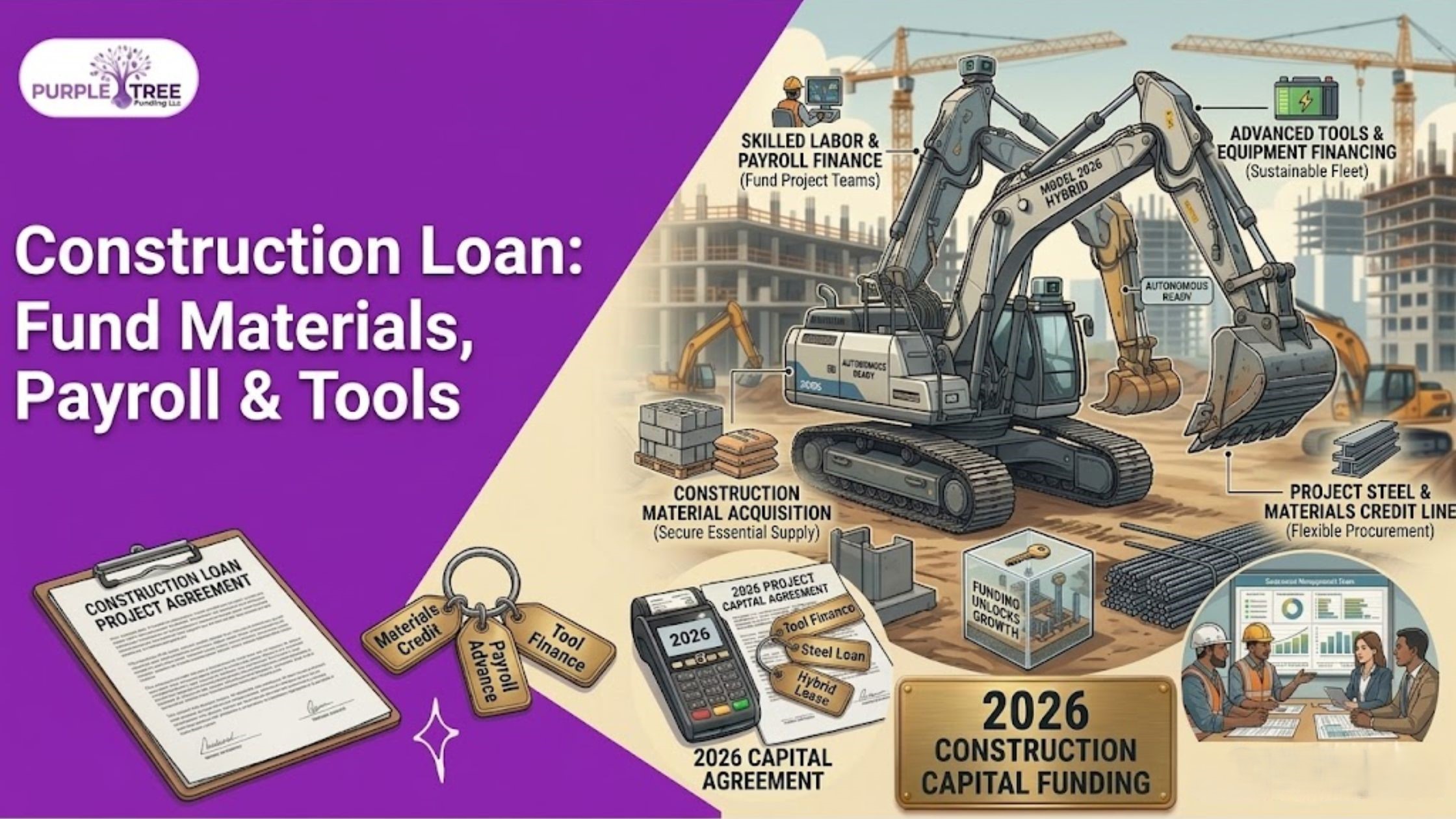
Construction Loan: Fund Materials, Payroll & Tools

Published on
June 9, 2026
Subscribe to our newsletter
Read about our privacy policy.
Thank you! Your submission has been received!
Oops! Something went wrong while submitting the form.

Construction runs on money you spend before you collect. You frame the job, buy the lumber, and make payroll long before the draw clears or the final invoice gets paid. That gap between outlay and payment is where most contractors feel the strain, especially when two or three jobs overlap. A construction and trade loan closes it by tying your capital to how projects actually pay out, not to a bank's timeline. We built our funding around that reality because we ran operations before we funded them.

You do not need a broker pushing the largest balance they can approve. You need capital sized to the jobs on your board, structured so the payments line up with when your draws and invoices land.

What Makes a Construction Loan Fit the Way Contractors Operate?

The right construction loan matches your capital to a specific need, whether that is materials for a signed job, payroll across a long build, or tools to take on bigger work. Payments track your draw schedule, so a slow-paying client does not put you behind on the next project. This keeps your debt tied to revenue you can actually see coming.

Understanding how a job runs changes how we underwrite. We read your cash flow the way a contractor does: draw timing, retainage, material costs, and the lag between completion and payment. Your project cycle sets the repayment schedule, not a generic template.

This approach keeps the capital working on your jobs instead of weighing down your payment cycle.

  • Funding sized to your actual signed contracts and job pipeline.
  • Repayment is built around your real draw and invoice timing.
  • Construction working capital tied to measurable jobs, not maximum approval.
  • Underwriting based on your deposit history and project flow.
  • Structures designed to protect your week-to-week liquidity across overlapping jobs.

How Do Contractors Put Construction Financing to Work?

Contractors use capital to remove the bottlenecks that cap their revenue, usually materials, payroll, or equipment. The right structure turns a job you had to pass on into one you can take. Here is where operators most often deploy funds.

Buying Materials Before the Draw Clears

Most jobs require you to purchase materials upfront and recover the cost later through a draw or final payment. Lumber, concrete, fixtures, and supplies all come due before the client pays. Construction business financing lets you buy what the job needs without draining the accounts you rely on for the next one. Locking in material pricing early also protects your margin when costs move mid-project.

Contractors deploy capital on materials in a few common ways.

  • Purchasing materials upfront for a signed job before the first draw.
  • Locking in pricing on bulk supplies ahead of a cost increase.
  • Stocking for overlapping projects so no crew sits waiting on materials.

Covering Payroll Through the Build

Crews get paid weekly; jobs pay on a draw or at completion. That mismatch is the fastest way for a profitable contractor to run short. A construction and trade loan gives you the runway to make payroll through the build instead of stretching subs or delaying pay. The capital covers the labor cost that keeps the job on schedule and your crew on site.

Operators bridge payroll gaps with construction working capital in these ways.

  • Funding weekly crew payroll between scheduled draws.
  • Paying subcontractors on time to keep the job moving.
  • Carrying labor costs through retainage held until the project close.

Investing in Tools and Equipment to Scale

Bigger jobs often require equipment you do not own yet. Turning down work because you are short a piece of gear is lost revenue you never recover. A contractor business loan lets you buy or finance the tools and equipment that open up larger contracts. Owning the right gear also cuts the rental costs that quietly eat into every job's margin.

Contractors invest in capacity using structured capital in these scenarios.

  • Buying equipment to qualify for and take on larger projects.
  • Replacing worn tools before downtime stalls an active job.
  • Cutting recurring rental costs by owning gear you use on every build.

Why Does Structured Capital Beat a Generic Offer?

Generic offers push the largest balance they can approve, which often leaves a contractor covering a payment that doesn't account for how jobs pay out. A structured construction loan reviews your pipeline and funds the work in front of you. That keeps the focus on your cash flow instead of a lender's volume targets.

At Purple Tree Funding, we underwrite for alignment, not maximum. We look at your draw timing and job stability, then build a structure that fits. The right capital at the right time lets you buy materials, make payroll, and take bigger jobs with confidence, while the financing stays matched to how your money actually comes in.

  • Capital timed to your draw and invoice schedule.
  • No overfunding that strains your cash position between jobs.
  • Underwriting based on real project context, not a credit box alone.

What Lenders Look At Before Approving a Construction Loan

Underwriting a contractor is not the same as scoring a retail business. A lender who understands the trades reads your operation through the numbers that actually predict whether you can carry the payment across a job cycle. Knowing what gets reviewed lets you apply from a position of strength instead of guessing.

The strongest applications show steady deposits and a real pipeline, not just one big contract. Draw history, retainage terms, and the lag between completion and payment tell a lender how your cash actually moves. Time in business, license status, and existing debt complete the picture.

Here is what tends to carry the most weight when a construction and trade loan gets reviewed.

  • Deposit history that shows consistent project revenue over recent months.
  • Draw schedules and retainage terms that confirm how and when you get paid.
  • Time in business and active license or trade credentials in good standing.
  • A pipeline of signed or near-certain jobs, not a single one-off contract.
  • Existing debt load, so the new structure does not stack past what your jobs support.

When Does It Make Sense to Take on Construction Financing?

Capital is a tool, not a reflex. The right time to take a construction loan is when a specific job pays back more than it costs to fund. The wrong time is borrowing to cover a structural gap that more work will only widen, and at Purple Tree Funding, we will tell you which one you are looking at before you sign.

Timing usually comes down to whether the capital removes a revenue cap or just patches a shortfall. Buying materials for a signed contract is a clear yes. Pulling cash to cover overhead during a dead stretch with nothing booked needs a harder look. An operator-minded lender will walk that line with you instead of pushing the largest balance through.

These are the moments when construction business financing tends to pay off.

  • A signed job needs materials or payroll funded before the first draw clears.
  • Retainage or a slow-paying client is holding up cash you have already earned.
  • Equipment or tools are the only things standing between you and a larger contract.
  • Growth is capped by capacity, not by demand for your work.

How to Choose the Right Construction Funding Structure

Not every job calls for the same kind of capital. Matching the structure to the need is what keeps the financing an asset instead of a monthly drag. A short material purchase and a multi-month build with staged draws are two different problems, and they call for two different setups.

Shorter, predictable needs usually fit a structure with faster turnaround and tighter terms. Longer builds with staged payments do better with construction working capital that flexes around your draw schedule. The goal is to match repayment to when the money actually lands, so a slow draw never forces you to choose between payroll and the payment.

A few questions help point you to the right structure.

  • How long until this job pays, and does it pay in stages or at completion?
  • Is the need one-time, like materials, or recurring, like payroll, across the build?
  • Will the capital tie up the cash you need for jobs already on the board?
  • Does the repayment schedule track your draws, or fight against them?

Final Thoughts

Running a construction or trade business profitably takes more than winning bids. It takes materials on site, crews paid, and capital that respects the gap between the work and the payment. A construction and trade loan built around your draw schedule gives you room to buy materials, cover payroll, and invest in tools without choking your liquidity. Skip the generic structures that ignore how contractors get paid.

Reach out to Purple Tree Funding to talk through a capital structure built for your next job or project. Let us build a plan that fits how you run.

FAQs

What is a Construction Loan Used For?

A construction loan funds the costs that come due before a job pays, including materials, payroll, and equipment. Contractors use it to keep projects moving and to take on work that would otherwise strain their cash.

How Does Construction Business Financing Help With Cash Flow?

Construction business financing bridges the gap between spending on a job and collecting on it. You cover materials and labor now and repay as your draws and final payments clear, so a slow-paying client does not stall your next project.

Can a Contractor Business Loan Cover Subcontractor Costs?

Yes. A contractor business loan can fund subcontractor payments along with your own crew payroll. Keeping subs paid on time protects your schedule and your relationships on future jobs.

Is Construction Working Capital Only for Large Contractors?

No. Construction working capital works for small and mid-size trade businesses, not just large general contractors. The structure is built around your job flow and drawing timing, whatever the size of your operation.

How Does Purple Tree Evaluate Construction Funding Applications?

We review your business through an operator lens, looking at deposit history, draw timing, and your job pipeline. From there, we structure capital to match your project cycle and the specific need in front of you.

Construction Loan: Fund Materials, Payroll & Tools

Learn how construction financing helps contractors cover materials, payroll, tools, and cash flow gaps with funding built around draw schedules.

Purple Tree Funding

June 9, 2026

Construction Loan: Fund Materials, Payroll & Tools

Learn how construction financing helps contractors cover materials, payroll, tools, and cash flow gaps with funding built around draw schedules.

Purple Tree Funding

[BIND: main_image]

Construction runs on money you spend before you collect. You frame the job, buy the lumber, and make payroll long before the draw clears or the final invoice gets paid. That gap between outlay and payment is where most contractors feel the strain, especially when two or three jobs overlap. A construction and trade loan closes it by tying your capital to how projects actually pay out, not to a bank's timeline. We built our funding around that reality because we ran operations before we funded them.

You do not need a broker pushing the largest balance they can approve. You need capital sized to the jobs on your board, structured so the payments line up with when your draws and invoices land.

What Makes a Construction Loan Fit the Way Contractors Operate?

The right construction loan matches your capital to a specific need, whether that is materials for a signed job, payroll across a long build, or tools to take on bigger work. Payments track your draw schedule, so a slow-paying client does not put you behind on the next project. This keeps your debt tied to revenue you can actually see coming.

Understanding how a job runs changes how we underwrite. We read your cash flow the way a contractor does: draw timing, retainage, material costs, and the lag between completion and payment. Your project cycle sets the repayment schedule, not a generic template.

This approach keeps the capital working on your jobs instead of weighing down your payment cycle.

  • Funding sized to your actual signed contracts and job pipeline.
  • Repayment is built around your real draw and invoice timing.
  • Construction working capital tied to measurable jobs, not maximum approval.
  • Underwriting based on your deposit history and project flow.
  • Structures designed to protect your week-to-week liquidity across overlapping jobs.

How Do Contractors Put Construction Financing to Work?

Contractors use capital to remove the bottlenecks that cap their revenue, usually materials, payroll, or equipment. The right structure turns a job you had to pass on into one you can take. Here is where operators most often deploy funds.

Buying Materials Before the Draw Clears

Most jobs require you to purchase materials upfront and recover the cost later through a draw or final payment. Lumber, concrete, fixtures, and supplies all come due before the client pays. Construction business financing lets you buy what the job needs without draining the accounts you rely on for the next one. Locking in material pricing early also protects your margin when costs move mid-project.

Contractors deploy capital on materials in a few common ways.

  • Purchasing materials upfront for a signed job before the first draw.
  • Locking in pricing on bulk supplies ahead of a cost increase.
  • Stocking for overlapping projects so no crew sits waiting on materials.

Covering Payroll Through the Build

Crews get paid weekly; jobs pay on a draw or at completion. That mismatch is the fastest way for a profitable contractor to run short. A construction and trade loan gives you the runway to make payroll through the build instead of stretching subs or delaying pay. The capital covers the labor cost that keeps the job on schedule and your crew on site.

Operators bridge payroll gaps with construction working capital in these ways.

  • Funding weekly crew payroll between scheduled draws.
  • Paying subcontractors on time to keep the job moving.
  • Carrying labor costs through retainage held until the project close.

Investing in Tools and Equipment to Scale

Bigger jobs often require equipment you do not own yet. Turning down work because you are short a piece of gear is lost revenue you never recover. A contractor business loan lets you buy or finance the tools and equipment that open up larger contracts. Owning the right gear also cuts the rental costs that quietly eat into every job's margin.

Contractors invest in capacity using structured capital in these scenarios.

  • Buying equipment to qualify for and take on larger projects.
  • Replacing worn tools before downtime stalls an active job.
  • Cutting recurring rental costs by owning gear you use on every build.

Why Does Structured Capital Beat a Generic Offer?

Generic offers push the largest balance they can approve, which often leaves a contractor covering a payment that doesn't account for how jobs pay out. A structured construction loan reviews your pipeline and funds the work in front of you. That keeps the focus on your cash flow instead of a lender's volume targets.

At Purple Tree Funding, we underwrite for alignment, not maximum. We look at your draw timing and job stability, then build a structure that fits. The right capital at the right time lets you buy materials, make payroll, and take bigger jobs with confidence, while the financing stays matched to how your money actually comes in.

  • Capital timed to your draw and invoice schedule.
  • No overfunding that strains your cash position between jobs.
  • Underwriting based on real project context, not a credit box alone.

What Lenders Look At Before Approving a Construction Loan

Underwriting a contractor is not the same as scoring a retail business. A lender who understands the trades reads your operation through the numbers that actually predict whether you can carry the payment across a job cycle. Knowing what gets reviewed lets you apply from a position of strength instead of guessing.

The strongest applications show steady deposits and a real pipeline, not just one big contract. Draw history, retainage terms, and the lag between completion and payment tell a lender how your cash actually moves. Time in business, license status, and existing debt complete the picture.

Here is what tends to carry the most weight when a construction and trade loan gets reviewed.

  • Deposit history that shows consistent project revenue over recent months.
  • Draw schedules and retainage terms that confirm how and when you get paid.
  • Time in business and active license or trade credentials in good standing.
  • A pipeline of signed or near-certain jobs, not a single one-off contract.
  • Existing debt load, so the new structure does not stack past what your jobs support.

When Does It Make Sense to Take on Construction Financing?

Capital is a tool, not a reflex. The right time to take a construction loan is when a specific job pays back more than it costs to fund. The wrong time is borrowing to cover a structural gap that more work will only widen, and at Purple Tree Funding, we will tell you which one you are looking at before you sign.

Timing usually comes down to whether the capital removes a revenue cap or just patches a shortfall. Buying materials for a signed contract is a clear yes. Pulling cash to cover overhead during a dead stretch with nothing booked needs a harder look. An operator-minded lender will walk that line with you instead of pushing the largest balance through.

These are the moments when construction business financing tends to pay off.

  • A signed job needs materials or payroll funded before the first draw clears.
  • Retainage or a slow-paying client is holding up cash you have already earned.
  • Equipment or tools are the only things standing between you and a larger contract.
  • Growth is capped by capacity, not by demand for your work.

How to Choose the Right Construction Funding Structure

Not every job calls for the same kind of capital. Matching the structure to the need is what keeps the financing an asset instead of a monthly drag. A short material purchase and a multi-month build with staged draws are two different problems, and they call for two different setups.

Shorter, predictable needs usually fit a structure with faster turnaround and tighter terms. Longer builds with staged payments do better with construction working capital that flexes around your draw schedule. The goal is to match repayment to when the money actually lands, so a slow draw never forces you to choose between payroll and the payment.

A few questions help point you to the right structure.

  • How long until this job pays, and does it pay in stages or at completion?
  • Is the need one-time, like materials, or recurring, like payroll, across the build?
  • Will the capital tie up the cash you need for jobs already on the board?
  • Does the repayment schedule track your draws, or fight against them?

Final Thoughts

Running a construction or trade business profitably takes more than winning bids. It takes materials on site, crews paid, and capital that respects the gap between the work and the payment. A construction and trade loan built around your draw schedule gives you room to buy materials, cover payroll, and invest in tools without choking your liquidity. Skip the generic structures that ignore how contractors get paid.

Reach out to Purple Tree Funding to talk through a capital structure built for your next job or project. Let us build a plan that fits how you run.

FAQs

What is a Construction Loan Used For?

A construction loan funds the costs that come due before a job pays, including materials, payroll, and equipment. Contractors use it to keep projects moving and to take on work that would otherwise strain their cash.

How Does Construction Business Financing Help With Cash Flow?

Construction business financing bridges the gap between spending on a job and collecting on it. You cover materials and labor now and repay as your draws and final payments clear, so a slow-paying client does not stall your next project.

Can a Contractor Business Loan Cover Subcontractor Costs?

Yes. A contractor business loan can fund subcontractor payments along with your own crew payroll. Keeping subs paid on time protects your schedule and your relationships on future jobs.

Is Construction Working Capital Only for Large Contractors?

No. Construction working capital works for small and mid-size trade businesses, not just large general contractors. The structure is built around your job flow and drawing timing, whatever the size of your operation.

How Does Purple Tree Evaluate Construction Funding Applications?

We review your business through an operator lens, looking at deposit history, draw timing, and your job pipeline. From there, we structure capital to match your project cycle and the specific need in front of you.

Written by

Purple Tree Funding