
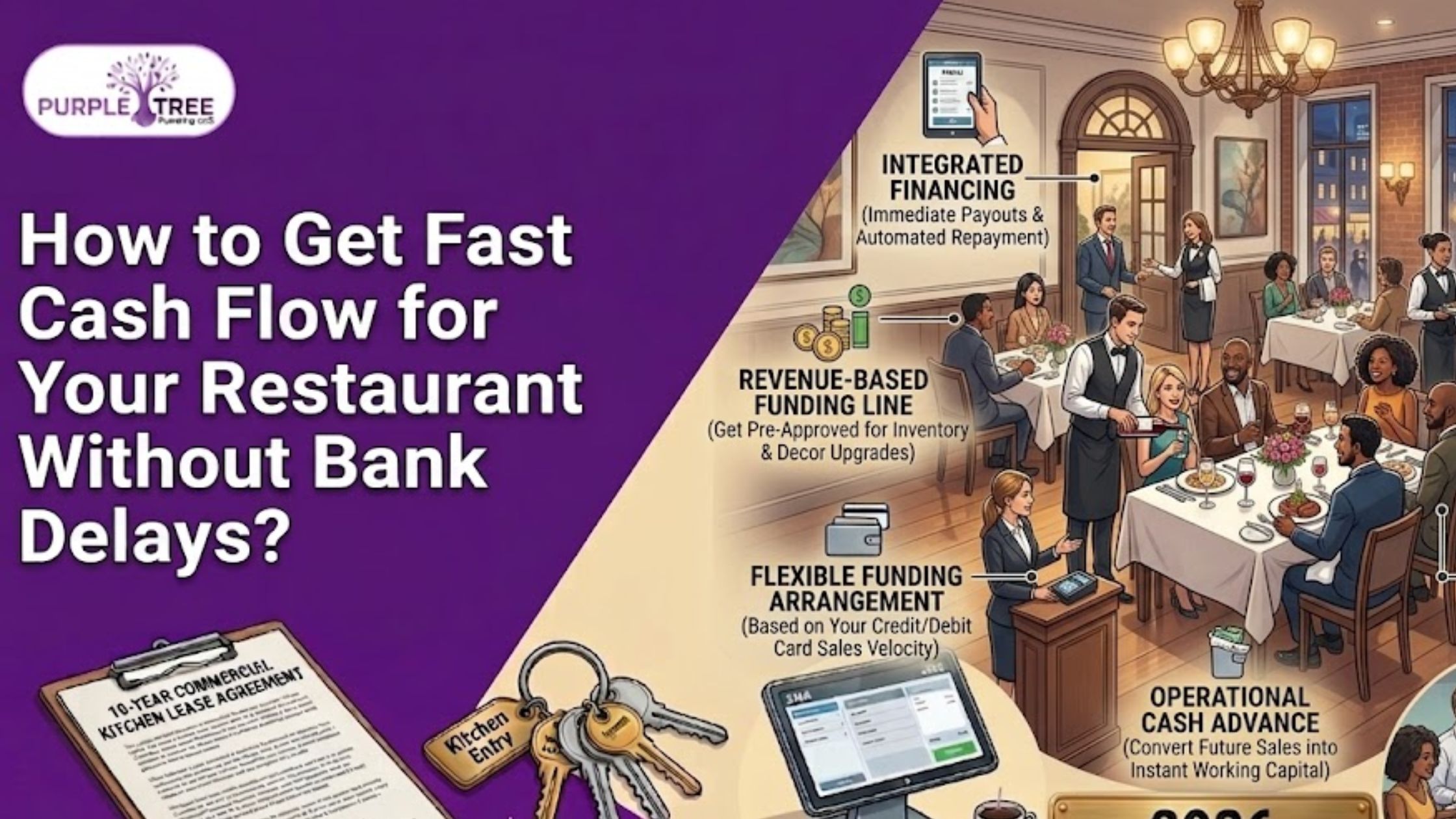
Most restaurants don't fail because of bad food or poor service. They fail because the money runs out at the wrong moment. Payroll hits before the weekend revenue posts. A supplier invoice comes due while you're waiting on a catering payment. Banks offer loans, but the approval timeline stretches 3 to 6 weeks, and a restaurant can't hold its breath that long. Cash flow funding was built for exactly this kind of pressure. It gives restaurant owners access to working capital quickly, without the drawn-out process of traditional lending.
Across the country, restaurant owners are using it to cover gaps, protect operations, and keep moving when timing works against them.
What Is Cash Flow Funding and Why Do Restaurants Need It?
Cash flow funding is short-term capital that helps a business cover operating gaps, payroll, inventory, repairs, or a slow-season stretch, without waiting weeks for a bank decision. For restaurants, it's often the difference between staying open and shutting the kitchen down early.
Here's why Florida restaurant owners specifically need it:
- Seasonal revenue swings hit hard, especially in tourist-heavy cities like Orlando or Miami Beach, where summer can cut foot traffic by 40% or more.
- Perishable inventory can't wait; you buy what you need now, and suppliers don't always extend credit.
- Equipment failures happen without warning, and a broken refrigeration unit can cost thousands in spoiled stock alone.
- Payroll gaps don't flex; your team needs to be paid regardless of whether last week was slow.
- Lease and utility cycles rarely align with your busiest cash periods, resulting in predictable monthly shortfalls.
Traditional banks typically take 3 to 6 weeks to process a small business loan. That timeline doesn't work when your pasta supplier needs payment in 10 days.
Which Cash Flow Funding Options Work Fast for Restaurants?
Not all of them work at the same speed, and the right one depends on how your restaurant generates revenue. Here's what restaurant owners across the Southeast are actually using.
Merchant Cash Advance: Speed When You Need It Most
A merchant cash advance (MCA) gives you a lump-sum upfront, and repayment is a small percentage of your daily card sales. For a restaurant doing consistent card volume, this structure fits naturally into how the business already moves money. It's not a loan in the traditional sense; there's no fixed monthly payment, so a slow Tuesday doesn't hit you the same way.
Restaurant cash flow funding through an MCA can move in 24 to 48 hours in most cases. The paperwork is minimal compared to a bank application. Here's what actually matters when you consider it:
- Approval is based on your revenue history, not just your credit score so restaurants with solid card volume qualify even when banks say no.
- Repayments flex with your sales, which means slower periods don't create a fixed payment crisis.
- Funds can be used for anything; there's no restriction on payroll vs. inventory vs. repairs.
Revenue-Based Financing: For Restaurants With Predictable Monthly Volume
This option works differently. Instead of a daily percentage, repayment is tied to a fixed portion of monthly revenue. It suits restaurants with more stable, recurring sales, such as a busy lunch spot in a business district or a catering operation with contracted clients.
Working capital funding structured this way gives you breathing room. The repayment schedule has some built-in logic: you pay more when business is good and less when it's not. For restaurants managing corporate accounts alongside walk-in traffic, this can be a better fit than an MCA.
- Funding amounts typically range from $25,000 to $500,000, depending on monthly revenue.
- Unlike traditional bank red tape, the review focuses on your business performance, not just your credit history.
- Once approved, funds can move quickly, and you get a clear offer to review before committing.
Working Capital Advance: Covering the Gap Without Overcomplicating It
Sometimes a restaurant just needs $20,000 to cover two weeks of payroll while waiting on a large catering invoice to clear. That's what a working capital advance is for — short, targeted, fast. It's not trying to fund a full expansion. It fills the gap, gets you through the rough patch, and clears.
Fast-cash flow loans in this category are often the most accessible option for newer restaurants or those with lower monthly revenue. Requirements tend to be more flexible:
- The minimum time in business is typically 1 year, which most established restaurants already meet.
- Monthly revenue thresholds start around $20,000, covering most active independent restaurants.
- Applications take minutes, not days, and you often hear back the same day.
Final Thoughts
Restaurant margins are thin, timing is everything, and waiting three weeks for a bank to make a decision can cost more than the loan itself. Cash flow funding isn't a last resort; it's a tool smart restaurant owners across Florida are using to stay ahead of gaps rather than react to them. Whether you're running a busy lunch counter in Miami or a catering business out of Fort Lauderdale, there's a working capital funding option that's right for your situation. The goal isn't more debt, it's keeping the kitchen moving while your money catches up with your business.
If you're a restaurant owner in Florida and you want to check your options without a long application or a hard credit pull, Purple Tree Funding can walk you through what's available for your business.
Frequently Asked Questions
What is Cash Flow Funding For Restaurants?
It's short-term capital that covers operating expenses, payroll, inventory, and repairs, without waiting weeks for a bank decision. Funds often arrive in 24 to 48 hours.
Can a Restaurant Get Fast Cash Flow Loans with Bad Credit?
Yes. Many alternative lenders assess your revenue and bank statements more than your credit score. Consistent monthly sales matter more than your credit history alone.
How Fast Can Restaurant Cash Flow Funding Be Approved?
With alternative lenders like Purple Tree Funding, many approvals happen the same day. Funds can be deposited into your account as early as 24 hours after approval.
What's the Difference Between a Merchant Cash Advance and Working Capital Funding?
A merchant cash advance repays from daily card sales. Working capital funding is a lump sum repaid on a set schedule, better suited for restaurants with steady monthly revenue.
Do I Need Collateral To Get Restaurant Cash Flow Funding?
Most alternative funding options, MCA, revenue-based financing, and working capital advances don't require traditional collateral. Approval is based on your business revenue and history.