

Applying for a business loan can feel overwhelming, especially when it comes to gathering all the paperwork lenders require. The truth is, documents required for a business loan are more than just forms—they are proof that your business is stable, legitimate, and capable of repaying borrowed funds. Whether you’re a startup owner searching for fast working capital or an established business expanding operations, having the right documents for a business loan prepared in advance can dramatically speed up approval.In the United States, different lenders—banks, the Small Business Administration (SBA), and alternative financing companies—each have their own requirements. While traditional banks often require a lengthy list of tax returns, financial statements, and personal guarantees, newer funding providers like Purple Tree Funding simplify the process, focusing on fast approvals with minimal paperwork.This guide breaks down exactly what documents you will need, why lenders ask for them, and how you can prepare a strong loan application without unnecessary stress.
Why Lenders Need Documents for Business Loan?
When you apply for a business loan in the USA, the paperwork you submit tells lenders a story: who you are, how your business is performing, and whether you can handle debt responsibly. While every lender has slightly different requirements, the purpose behind documentation is the same: to assess risk and ensure repayment ability.Here’s a detailed breakdown of why these documents matter:
1. Identity and Business Verification
Fraud prevention is a top priority in the lending industry. Before any money is issued, lenders must confirm both the borrower’s personal identity and the legal existence of the business. That’s why you’re often asked for:
- A government-issued photo ID (driver’s license, passport)
- Your Social Security Number (SSN) or Employer Identification Number (EIN)
- Articles of incorporation or business licenses
Without these, lenders cannot be sure your company is registered, compliant with state laws, or even operating legitimately.
2. To Assess Creditworthiness
Lenders want proof that you have a track record of managing credit. By reviewing personal and business credit reports, along with past tax returns, they gain insight into:
- Payment History: Do you consistently pay your bills and debts on time?
- Credit utilization: How much of your available credit are you using?
- Outstanding Debts: Are You Already Overleveraged?
If your credit isn’t perfect, don’t panic—alternative financing providers like Purple Tree Funding look beyond credit scores and may still approve your application if your cash flow is strong.
3. To Measure Financial Stability
For most lenders, numbers tell the clearest story. Financial documentation, such as bank statements, balance sheets, and profit & loss reports, shows whether your business generates enough consistent revenue to cover loan repayments. Lenders want reassurance that:
- Your income is stable and not seasonal only
- You maintain a healthy cash flow to handle new debt.
- Expenses are managed efficiently.
The stronger your financial history, the more confident lenders are likely to be about approving you.
4. To Determine Loan Terms and Risk
The type of loan, interest rate, and repayment period you’re offered depend heavily on the strength of your documentation. For example:
- Strong financials + good credit = higher loan amounts at lower interest rates
- Weak or incomplete paperwork = smaller loans with stricter repayment terms
In other words, your documents not only affect approval chances but also the cost of borrowing.
Personal Documents Required For A Business Loan

When you apply for a business loan, lenders don’t just look at your company; they also look at you, the owner. Your personal background, financial history, and identity significantly influence whether your loan is approved. This is especially true for small businesses and startups where the owner’s personal finances often serve as a reflection of the company’s reliability.Here’s a checklist of the most common personal documents required for a business loan in the USA:
1. Government-Issued Photo ID
Lenders need to confirm your identity to prevent fraud. A driver’s license, state-issued ID, or valid passport is usually accepted.
2. Social Security Number (SSN)
Most lenders require your SSN to run a personal credit check. Even if you apply with your business, your personal credit score is often reviewed, especially if your business is new.
3. Personal Credit Report
Your credit history provides lenders with insight into how you manage debt. They’ll review your score, payment history, and outstanding obligations. While traditional banks may have strict requirements, alternative lenders like Purple Tree Funding consider the bigger picture and may approve loans even if your credit isn’t perfect.
4. Personal Tax Returns (Last 2–3 Years)
These show your income consistency and ability to repay the loan. For startups without years of business records, personal tax returns often carry even more weight.
5. Proof of Residence
Some lenders may request utility bills, mortgage statements, or rental agreements to verify your address.Tip for Borrowers: Keep your personal financial documents organized and updated. A missing tax return or outdated ID can delay your loan approval process by weeks.
Business Documents Required for a Loan Application
Along with your personal records, lenders require proof that your business is legally established and operating in accordance with U.S. regulations. These documents demonstrate that your company is legitimate, compliant, and structured in a manner that facilitates lending. Without them, even a profitable business may struggle to get approved.Here are the most common documents required for a business loan application:
1. Articles of Incorporation / Organization
If your business is an LLC or corporation, lenders will ask for your Articles of Incorporation (or Organization). This legal document confirms that your company is a registered entity in your state.
2. Employer Identification Number (EIN)
Think of your EIN as your business’s Social Security Number. It’s required for tax filings and is almost always needed for business loans.
3. Business Licenses & Permits
Lenders want assurance that your company is operating legally and in compliance with all relevant regulations. Depending on your industry, you may need local, state, or federal licenses and permits. For example, a restaurant may need a food service license, while a contractor might need state-level permits.
4. Ownership & Partnership Agreements
If your company has multiple owners or shareholders, lenders often request operating agreements or shareholder documents to see how ownership is structured. This also helps them know who is financially responsible.
5. Commercial Lease Agreement (if applicable)
If your business operates from a physical location, lenders may ask for a copy of your lease agreement to confirm stability and long-term operations.
6. Business Plan (for startups or SBA loans)
Some lenders, particularly the Small Business Administration (SBA), require a detailed business plan that outlines your company’s structure, revenue model, and growth projections. This is less common with alternative lenders like Purple Tree Funding, which focus more on real-time cash flow.Tip for Borrowers: Keep digital copies of all your business registration and licensing documents in one secure folder. Having everything ready can speed up your loan approval by days or even weeks. Before gathering the documents required for a business loan, make sure you understand all the key business loan application requirements to avoid delays in approval.
Financial Documentation Checklist
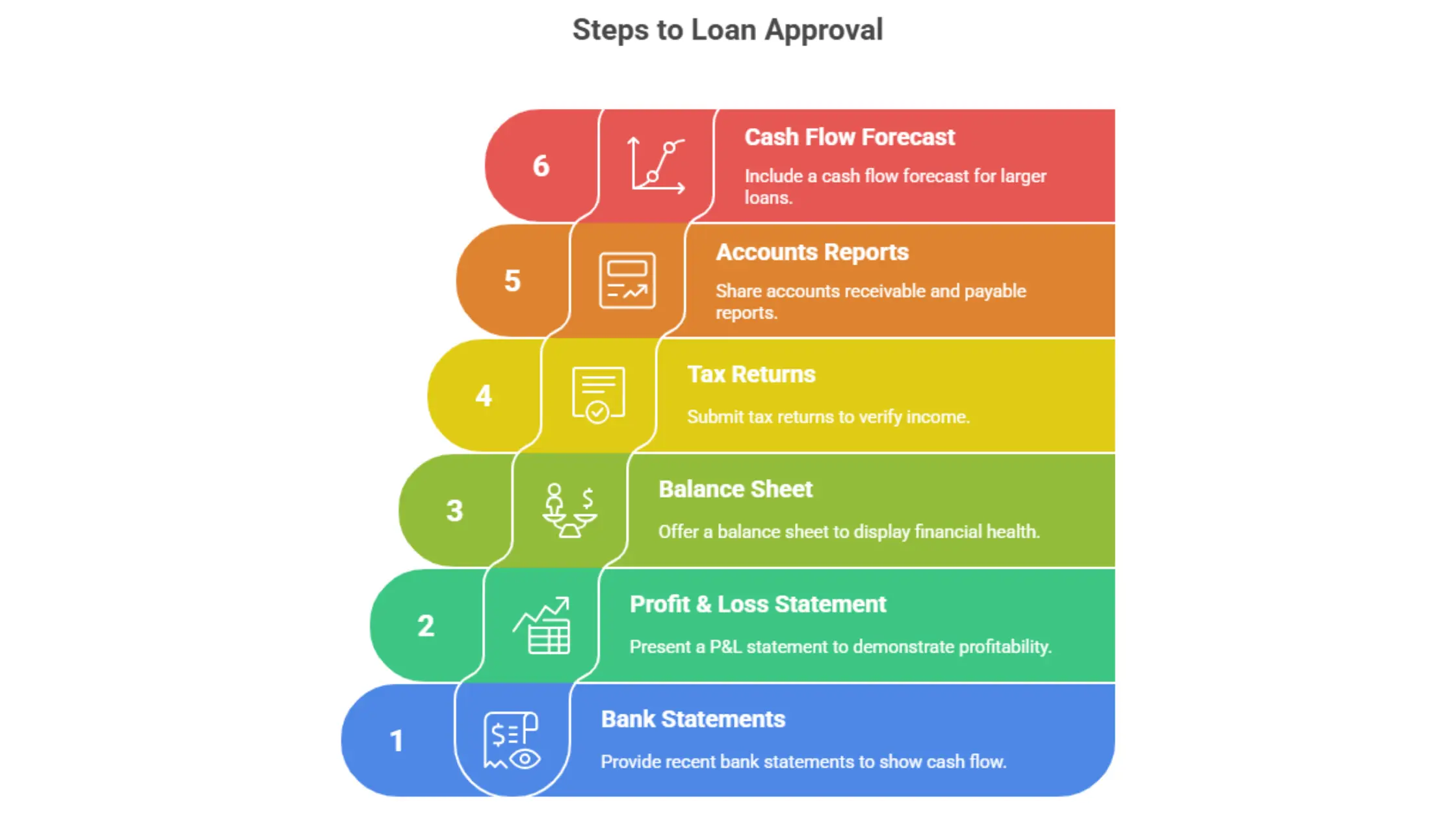
While identity and business registration documents prove you exist, it’s your financial records that convince lenders you can actually repay the loan. These documents highlight your company’s profitability, cash flow, and long-term stability.Here’s a detailed checklist of the financial documents lenders typically request in the USA:
1. Business Bank Statements (Last 3–6 Months)
Bank statements give lenders a real-time look at your cash flow—the money coming in and going out of your business. Consistent deposits and healthy balances increase your approval odds.
2. Profit & Loss Statement (P&L)
Also known as an income statement, this document displays your company’s revenues, expenses, and net profit over a specified period. It helps lenders see whether your business is operating at a profit or loss.
3. Balance Sheet
This statement provides a snapshot of your company’s assets, liabilities, and equity. Lenders use it to gauge your overall financial health and determine whether you’re overleveraged.
4. Business Tax Returns (Last 2–3 Years)
Tax returns are a reliable way to verify income. Lenders review them to confirm your reported earnings match your financial statements. For newer businesses without a long tax history, personal tax returns may also be required.
5. Accounts Receivable & Accounts Payable Reports
These reports show what money is owed to your business (receivables) and what you owe others (payables). Lenders analyze these to measure cash flow and financial obligations.
6. Cash Flow Forecast (for larger loans or SBA loans)
Some lenders request projected financial statements showing how you expect to generate revenue and handle debt repayment in the coming months or years.Pro Tip: Many small businesses get delayed in the approval process because their financials aren’t up to date. By keeping your P&L, balance sheet, and tax filings current, you’ll not only look professional but also speed up your loan decision.
Lender-Specific Documentation Requirements
1. Traditional Banks
Banks typically require the most documentation, including years of tax returns, complete financial statements, and sometimes collateral. The process is thorough but often slow, making it difficult for newer businesses to qualify.
2. SBA Loans
SBA-backed loans are popular due to their low interest rates and extended repayment terms. But the paperwork is heavy:
- Detailed business plan
- Personal and business tax returns (3 years)
- Resumes of business owners
- Debt schedules
- Collateral documentation
3. Alternative Lenders (Purple Tree Funding)
Purple Tree Funding offers simplified documentation and faster approvals — typically just ID, bank statements, and minimal business proof. This helps entrepreneurs get capital in days, not weeks.
Comparison: Secured vs Unsecured Loan Documents
- Secured Loans – Require collateral documentation (property deeds, vehicle titles, or equipment appraisals). You’ll also need proof of ownership for assets used as security.
- Unsecured Loans – Focus more on your credit history and cash flow, rather than assets. Typically require less paperwork but may come with higher interest rates.
If you don’t want to risk personal or business assets, Purple Tree Funding offers unsecured business loan options with flexible documentation requirements.
Tips to Speed Up Approval
If you want a smooth application process, preparation is key:
- Organize documents digitally by creating a secure folder with updated files.
- Keep tax filings current; outdated tax returns often cause rejections.
- Be transparent; lenders value honesty about debts or credit issues.
- Choose lenders wisely; alternative lenders like Purple Tree Funding are best if you need fast approval without stacks of paperwork.
Conclusion: Make the Loan Process Easier with Purple Tree Funding
The proper documents can mean the difference between a quick approval and weeks of back-and-forth delays. While banks and SBA lenders require lengthy documentation, Purple Tree Funding provides a more straightforward path, helping small businesses in the USA secure fast, flexible financing without the red tape.📞 Ready to apply? Visit Purple Tree Funding today and experience how easy business financing can be when built for entrepreneurs, not bureaucracy.
FAQs: Documents for a Business Loan
Q1. What are the documents required for a business loan in the USA?
Typically: ID, SSN, EIN, tax returns, bank statements, financial statements, and incorporation papers.
Q2. Can I get a business loan without tax returns?
Yes, some lenders (like Purple Tree Funding) offer alternative financing that requires only bank statements or proof of cash flow.
Q3. Do startups need business documents for funding?
Yes. At a minimum, startups need incorporation papers, an EIN, and a business plan. SBA loans require even more.
Q4. How does Purple Tree Funding simplify loan applications?
By focusing on essential documents (like bank statements and ID), Purple Tree Funding speeds up the approval process and helps businesses get funded without mountains of paperwork.
Q5. How can I increase my business loan approval chances?
Maintain updated financial records, ensure good credit hygiene, and apply with lenders that value cash flow and flexibility.