
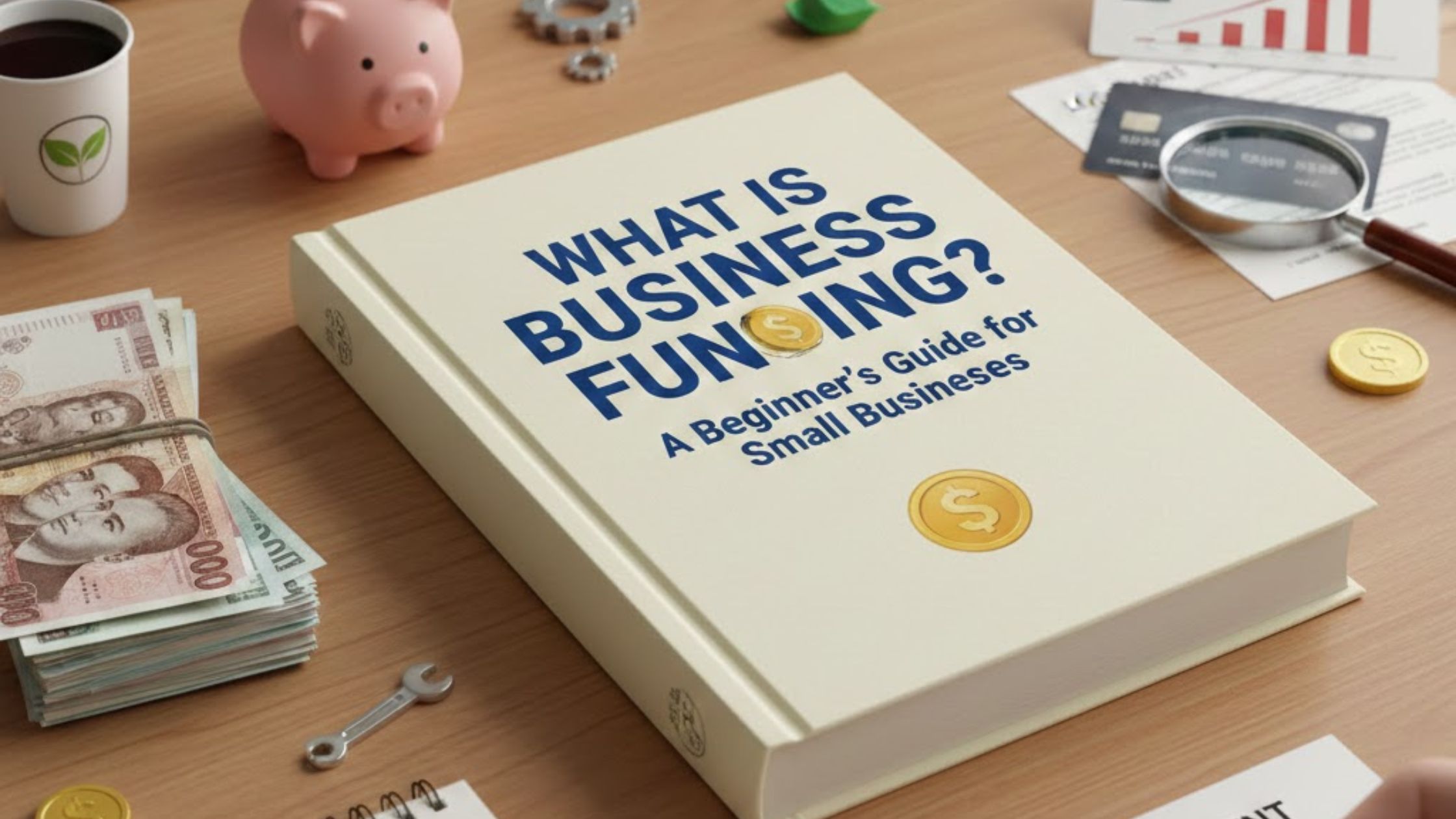
Starting a company is one of the most exciting things you can do. However, every great idea needs a foundation to stand on. In the world of commerce, that foundation is money. As a new entrepreneur, you may be asking, what is business funding? You may also be overwhelmed by the numerous available options.
We have prepared a full-fledged guide to simplify things. We will discuss the mechanisms of funding, discuss various funding sources, and assist you in choosing the best way that fits your personal path.
Understanding the Basics: What Is Business Funding?
Simply put, business financing refers to the cash that an owner receives to initiate, operate, or expand a business. Think of it like fuel for a car. Without fuel, the car cannot move. Similarly, a business cannot purchase inventory, remunerate workers, or lease an office without capital.
The money might be raised internally within the business (such as your own savings) or externally (such as a bank). It is a vital step for almost every company. Most owners need extra cash to manage their "cash flow." Cash flow is just a fancy way of saying the money moving in and out of your business. When you have a bad month and your customers are not purchasing, you can use the funds to cover your bills until the month improves.
How Small Business Funding Works
Before you look for money, you must understand the "rules of the game." There are three main ways that money enters a business. Each way has different rules about how you use it and whether you have to give it back.
1. Debt Financing (The Loan Path)
This is the most common way to get money. You go to a lender and ask to borrow a specific amount. You agree to pay it back over a set time—usually months or years. You also pay "interest," which is a small fee the lender charges for letting you use their money.
- The Good Part: You keep 100% ownership of your shop. No one else tells you how to run things.
- The Hard Part: You must make payments every month, even if you didn't make much money that month.
2. Equity Financing (The Partner Path)
With equity, you do not "borrow" money. Instead, you "sell" a piece of your company to an investor. They give you the cash you need now. In return, they own a percentage of your business.
- The Good Part: You never have to pay the money back. If the business fails, you don't owe the investor anything.
- The Hard Part: You now have a partner. You have to share your future profits with them forever, and they might have a say in your business decisions.
3. Grants (The "Gift" Path)
Grants are funds provided by the government or special organizations.
- The Good Part: It is free money. You don't pay it back, and you don't give away ownership.
- The Hard Part: They are very hard to get. Thousands of people apply for them, and they are usually only for very specific things, like scientific research or helping a specific neighborhood.
Exploring Small Business Funding Options
There are many places to find money. Depending on how long you have been in business and how much you earn, some will be better than others.
Bootstrapping (Self-Funding)
This is when you use your own cash. It could be your savings account or money from your day job. Most funding for new business owners starts here. It shows others that you believe in your idea enough to risk your own money.
Friends and Family
Many people ask those closest to them for help. This is often faster than going to a bank. However, be careful. Business can be stressful. Always write down the agreement on paper so everyone understands the rules. This protects your relationships.
Traditional Bank Loans
This is the "old school" way. You visit a local bank or credit union. They look at your credit score and your history. Usually, they want to see a score of 680 or higher. They also want to see that you have been making money for at least two years.
SBA Loans
The Small Business Administration (SBA) is a part of the government. They don't lend money directly, but they "guarantee" loans made by banks. This means if you can't pay the loan back, the government helps the bank. This makes banks more willing to give funding for new business owners who might be a bit risky.
Crowdfunding
Websites like Kickstarter allow you to ask the public for help. People give you small amounts of money. In exchange, you might give them your product early or a special "thank you" gift. This is a great way to see if people actually like what you are selling before you make too much of it.
What Are Alternative Funding Options For Small Businesses?
Sometimes, big banks say "no." This happens a lot to new businesses or owners who don't have perfect credit. This is where alternative funding for a small business comes in.
Alternative lenders are usually online companies like Purple Tree Funding. They use technology to look at your business differently. Instead of just looking at a credit score from ten years ago, they look at your daily sales and how much your customers love you.
Why choose alternative funding?
- Speed: You do not have to wait weeks to get an answer.
- Flexibility: They offer various products such as “Merchant Cash Advances” or “Lines of Credit.”
- Less Fuss Approval: They tend to deal with businesses less than two years old.
How to Prepare for the Application
Whichever of the small business funding options you decide on, you need to be ready. Investors and lenders want to know that you are organized. Here is a simple checklist:
- The Business Plan: This is a roadmap. It says who you are, what you sell, who your customers are, and how much money you think you will make in the next three years.
- Financial Records: Collect your bank statements from the last four to six months. Have your tax returns ready.
- The "Use of Funds": Don't just ask for "some money." Say, "I need $20,000 to buy a new oven and hire two part-time workers." This shows you have a growth plan.
- Credit Check: Know your score. If it is low, be ready to explain why and show how you are making it better.
Essential Tips for Success
The following three rules should be remembered when you begin to seek capital:
- Don't Take Too Much: It is too easy to take all the money. However, keep in mind that you are going to pay back every dollar that you borrow. Just take what you need toward your next goal.
- Read Every Word: Read the fine print on a contract before you make a signature. Look for hidden fees. Be certain of just how much you are going to pay back altogether.
- Be Honest: You should always be honest in your business numbers. If a lender finds out you hid a debt, they will lose trust in you.
Conclusion: Taking the Next Step
Understanding what business funding is is the first major hurdle for any entrepreneur. Whichever way you take, be it the conventional route or seek alternative means of financing a small business, the key thing is to take a step forward.
Money is a tool. When properly applied, it can assist you in serving more customers, generating jobs, and leaving a legacy. When you are willing to learn how to raise the capital you require, visit the experts at Purple Tree Funding. Our specialty is to make it easy, quick, and clear so that you can be able to go back to what you are best at- running your business.
It is worth investing in your dream. Begin now and see your small business become great!